Hyper-Personalization: From Concept to Practice
We talk about personalization in higher education more than ever before.
It appears in strategic plans, technology roadmaps, and conversations about artificial intelligence. Yet when institutions attempt to move from vision to execution, a fundamental question emerges:
What does it actually mean to personalize the educational experience at scale?
During AWS Future Campus Chile 2026, this question became a common thread across conversations among university leaders, CIOs, academic innovators, student success professionals, and technology experts. While discussions covered a wide range of topics—from student retention and academic integrity to AI adoption in teaching—a shared perspective emerged:
Personalization is not a feature. It is an ecosystem.
Beyond Technology
There is a natural tendency to associate personalization with artificial intelligence.
However, one of the event’s most important conclusions was that technology alone cannot create personalized educational experiences.
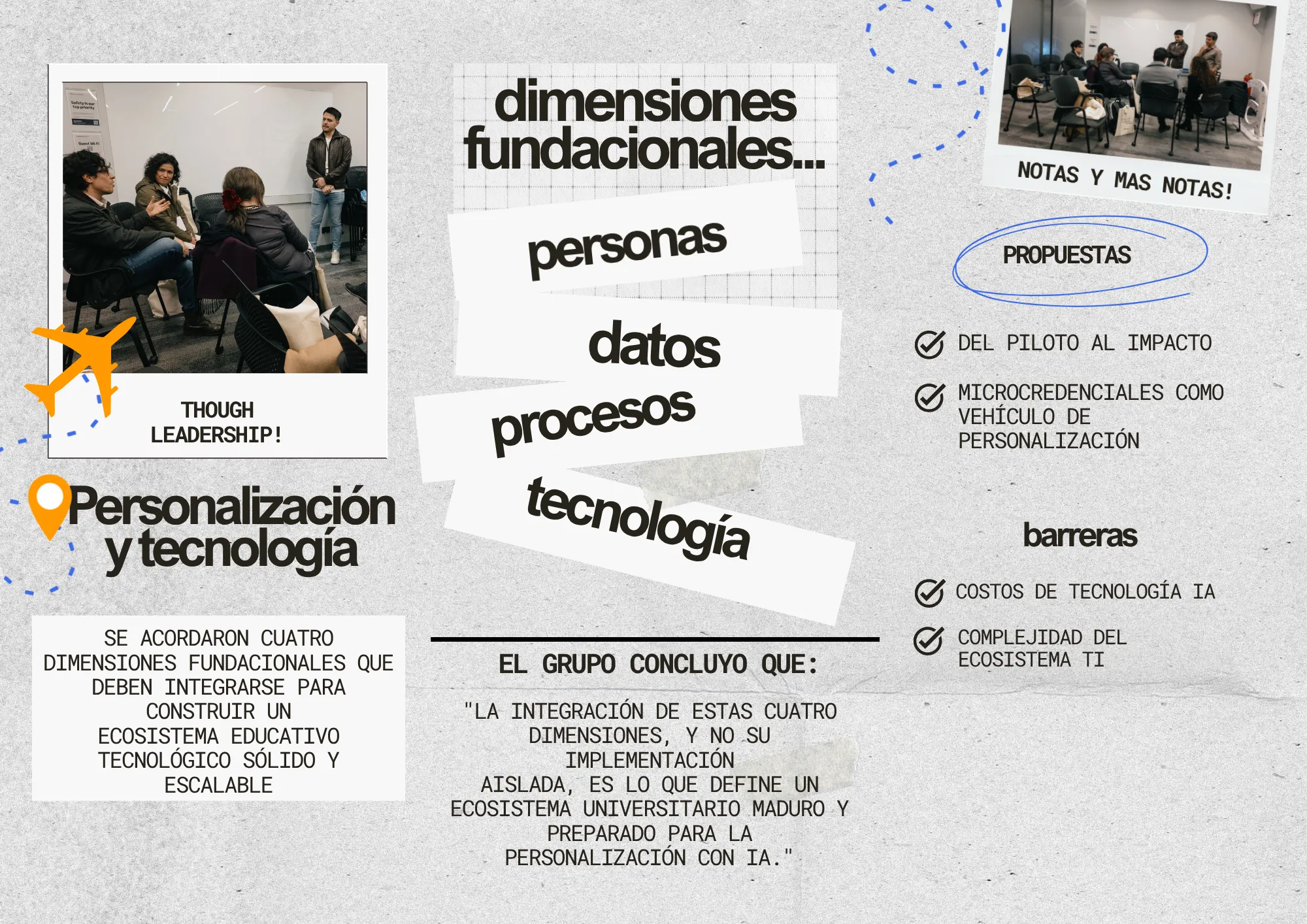
Real transformation occurs when institutions successfully integrate four foundational dimensions:
- People
- Data
- Processes
- Technology
Not as isolated initiatives, but as an interconnected system that enables institutions to better understand each student, empower each educator, and respond more effectively to changing needs.
When one of these dimensions is missing, personalization remains fragmented.
When they work together, personalization becomes an institutional capability.
Personalization Means Supporting Student Journeys
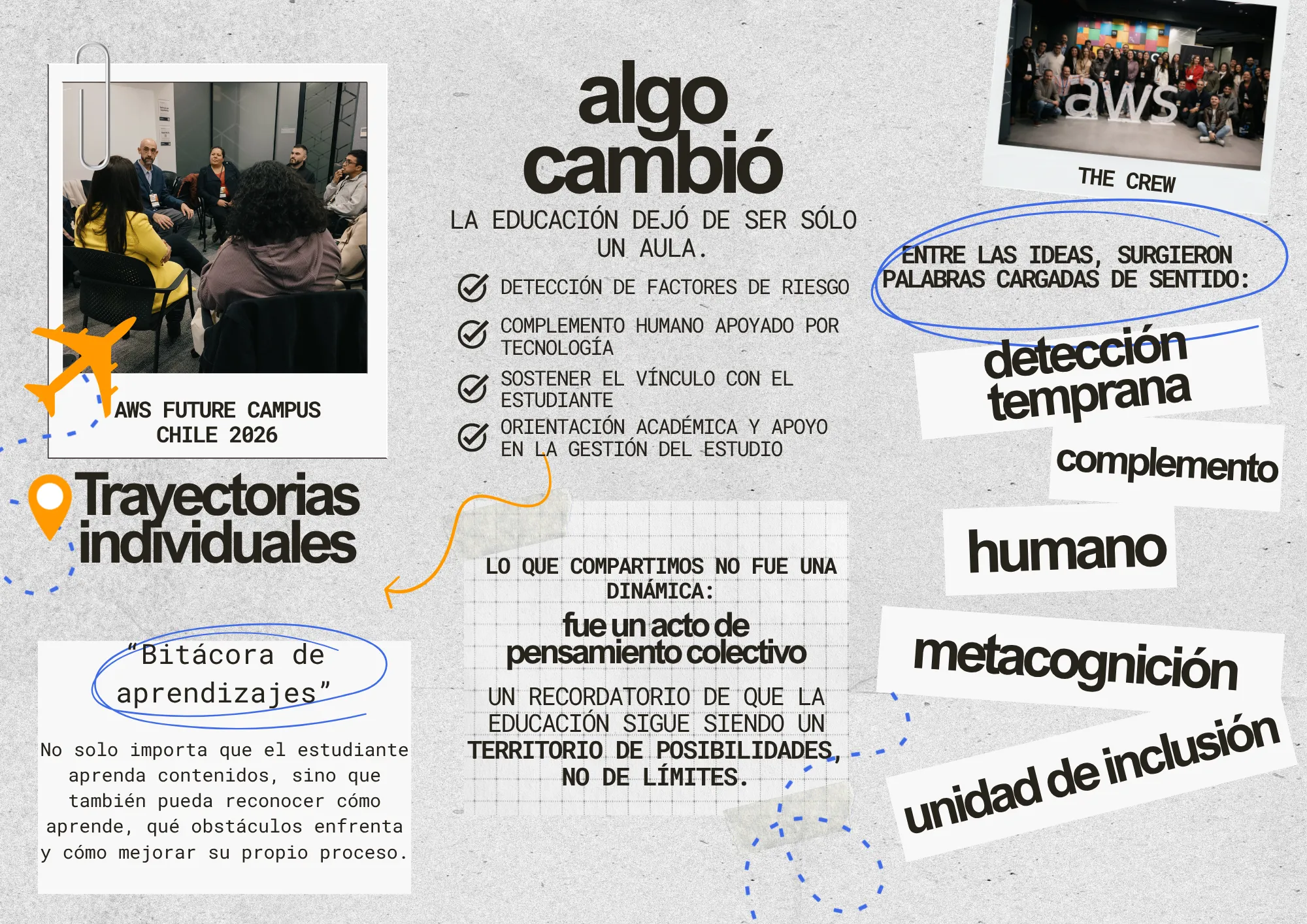
One of the experiential labs focused on a challenge facing nearly every higher education institution today: student retention.
The conversation led to a clear conclusion.
Identifying at-risk students is not enough.
What truly matters is building the institutional capacity to intervene at the right moment.
Early risk detection, academic advising, mentoring, personalized outreach, and human support remain irreplaceable components of student success strategies.
What has changed is that data and artificial intelligence now allow institutions to identify signals that were previously invisible—declining participation, recurring academic difficulties, time-management challenges, or reduced engagement with the institution.
Technology provides visibility.
People create impact.
That is why effective personalization does not replace human connection—it strengthens it.
Faculty Remain at the Center
Another important insight emerged from discussions about the role of faculty in the age of artificial intelligence.
A powerful idea surfaced repeatedly:
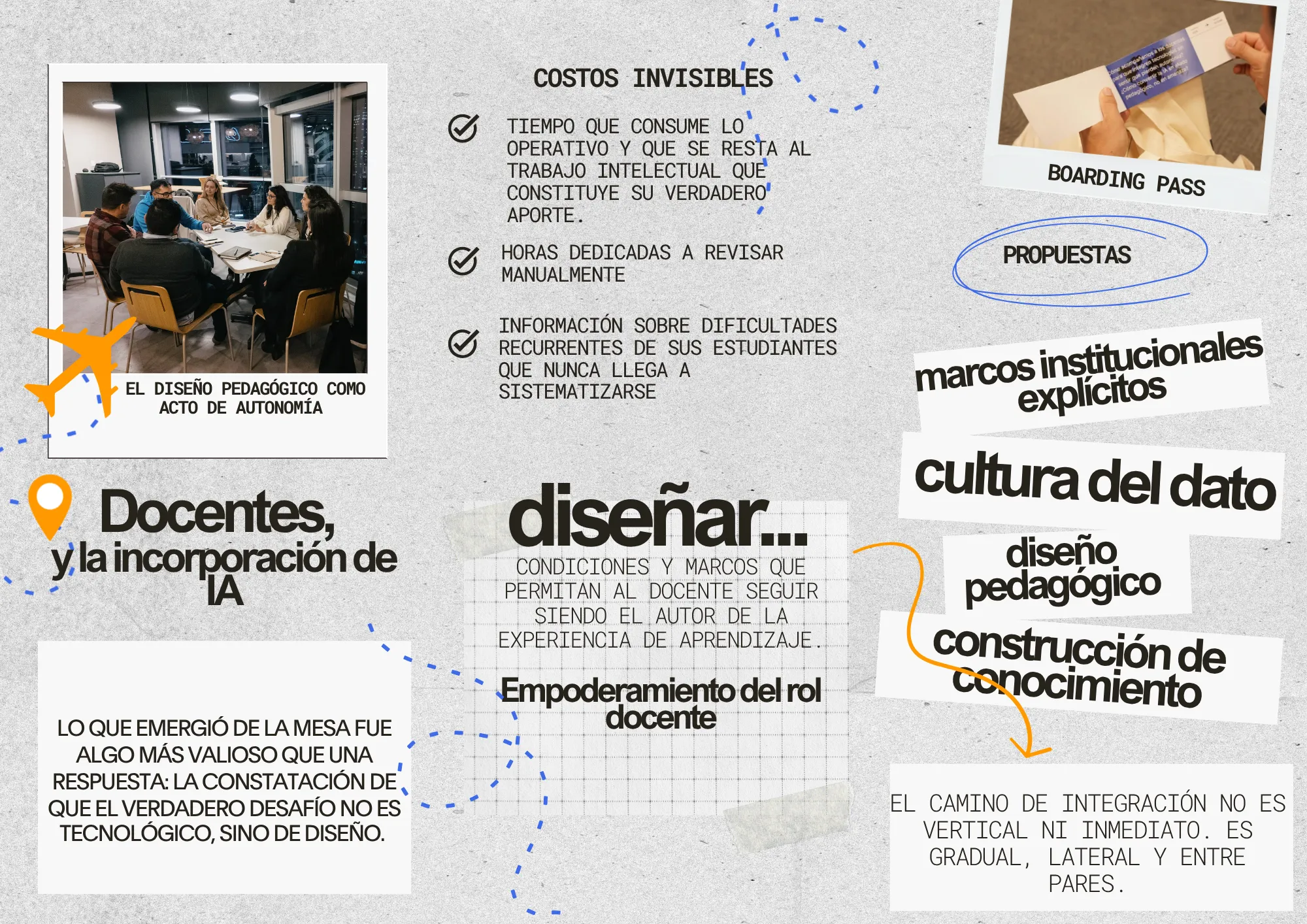
The challenge is not technological. It is one of design.
Designing the conditions that allow educators to remain the authors of the learning experience.
In many institutions, conversations about AI focus on automation and efficiency. Yet participants agreed that AI creates the greatest value when it reduces operational burdens and frees educators to focus on what matters most: teaching, mentoring, and creating meaningful learning experiences.
The question is no longer whether AI will automate certain tasks.
The real question is how AI can amplify educators’ ability to teach, guide, and inspire.
Trust Must Be Personalized Too
Personalization requires trust.
And trust requires institutions capable of ensuring academic integrity, privacy, and transparency.
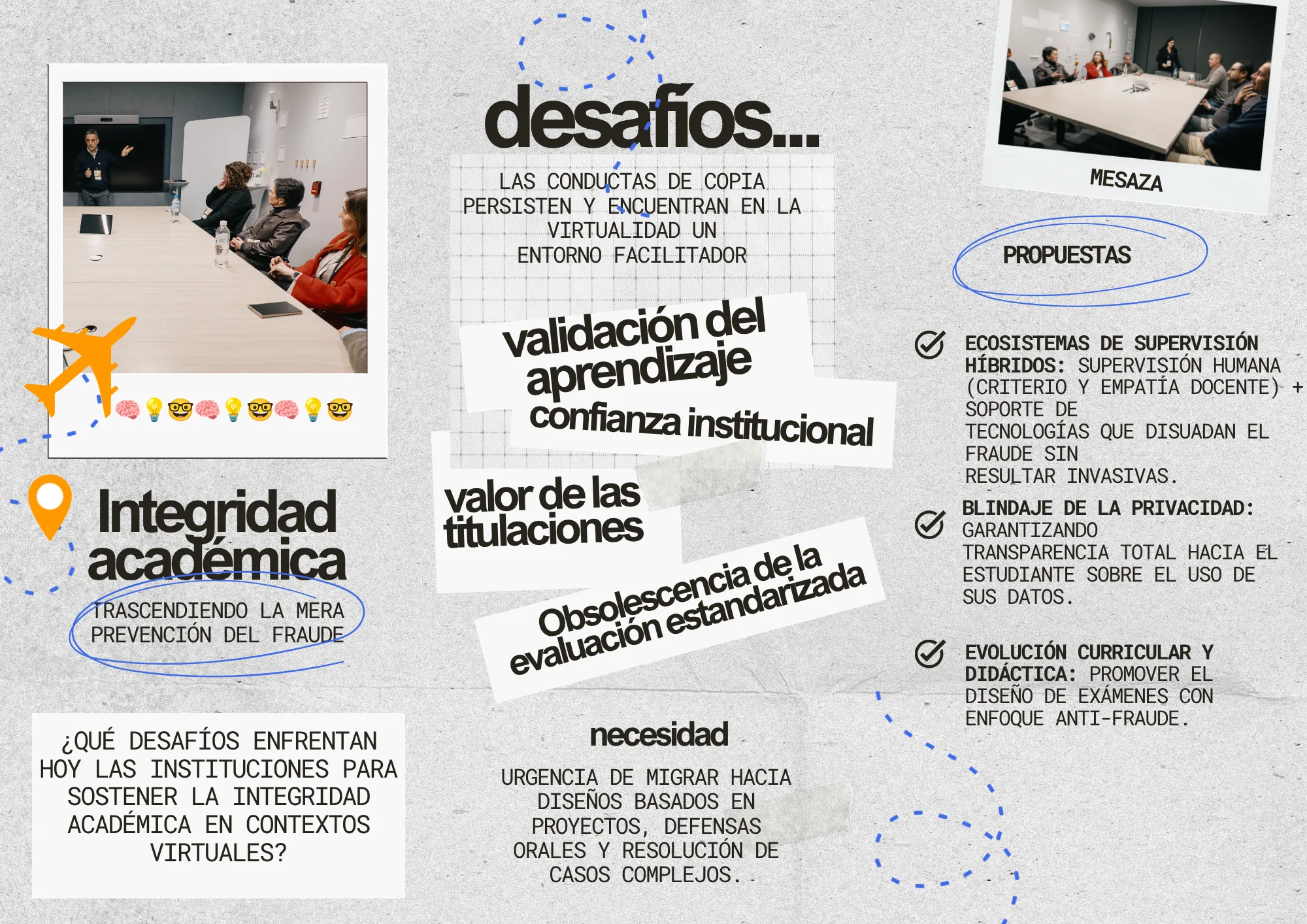
During the experiential labs, participants explored the growing challenges of maintaining integrity within digital and hybrid learning environments.
The conclusion was clear:
The future is not about simply monitoring students more effectively.
It is about assessing learning differently.
Authentic assessments, project-based learning, oral defenses, and real-world problem-solving emerged as strategies that strengthen both learning outcomes and institutional credibility.
Once again, AI was viewed as an important enabler—but not the primary solution.
Meaningful innovation happens when institutions redesign educational processes to align with how learning is evolving.
From Pilots to Ecosystems
Perhaps one of the most valuable insights from AWS Future Campus was that hyper-personalization is not something institutions implement.
It is something they build.
It does not emerge overnight through a single platform or technology investment.
It begins with focused pilots.
It grows through structured data collection and analysis.
It expands through more agile institutional processes.
And it matures when an organization develops a culture of evidence-based decision-making.
Within this context, microcredentials emerged as one of the most promising vehicles for delivering personalization at scale.
Their ability to create flexible, modular learning pathways allows institutions to respond more effectively to individual learner goals while adapting quickly to evolving workforce demands.
The Future of Education Is Deeply Human
If there is one idea that summarizes the key lessons from AWS Future Campus, it is this:
Hyper-personalization is not about adapting people to technology. It is about designing institutions that better understand people.
Artificial intelligence, data, and digital platforms are powerful enablers.
But the true differentiator will remain an institution’s ability to create educational experiences that recognize the uniqueness of every learner, empower every educator, and strengthen trust across the academic community.
Because the future of education will not be defined by the technologies we adopt.
It will be defined by how we use them to amplify what makes learning a profoundly human experience.


