The future is designed: academic program planning
Designing the future: course planning
Designing a course is much more than writing a syllabus. It’s about thinking how we teach, what competencies we develop, how learning evolves, and the role each subject plays within the university experience.
The challenge of planning at scale
In an institution as large and diverse as Universidad Siglo 21, this work involves coordinating teams, ensuring academic consistency, and keeping an enormous amount of information up to date. Any change in a single subject can impact an entire degree program.
Facing this challenge, the university decided to transform how academic planning is done—moving from a manual, fragmented process to a fully digital, collaborative, and traceable experience.
This is how the course planner was born: an internal platform (back office) developed to centralize and digitize academic management. From there, teams can create, review, and approve course programs in a comprehensive way: defining competencies, objectives, and methodologies; establishing evaluation criteria; assigning instructors, subjects, classrooms, campuses, schedules, and learning modalities.
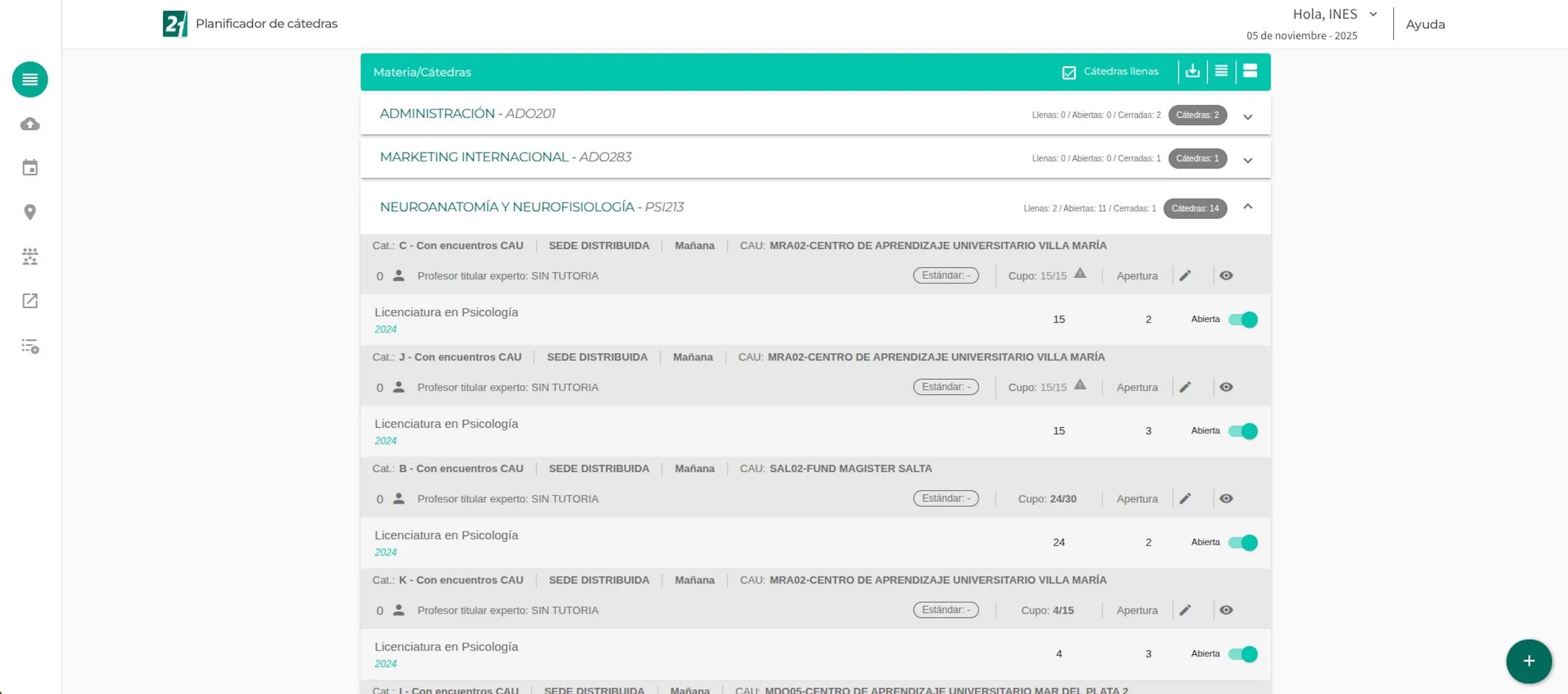
It began as a tool for the on-campus modality and later expanded to on-campus home and distance learning, where most students are concentrated. A step forward that not only optimizes internal tasks but also lays the foundation for a more agile, connected, and future-ready university.
This digital transformation not only streamlined internal management but also reduced administrative times and strengthened coordination across academic areas, freeing teams from repetitive tasks so they can focus on what matters most: educational quality.
In 2025 alone, nearly 100,000 courses were created through this platform—reflecting both the university’s sustained growth and the system’s scalability.
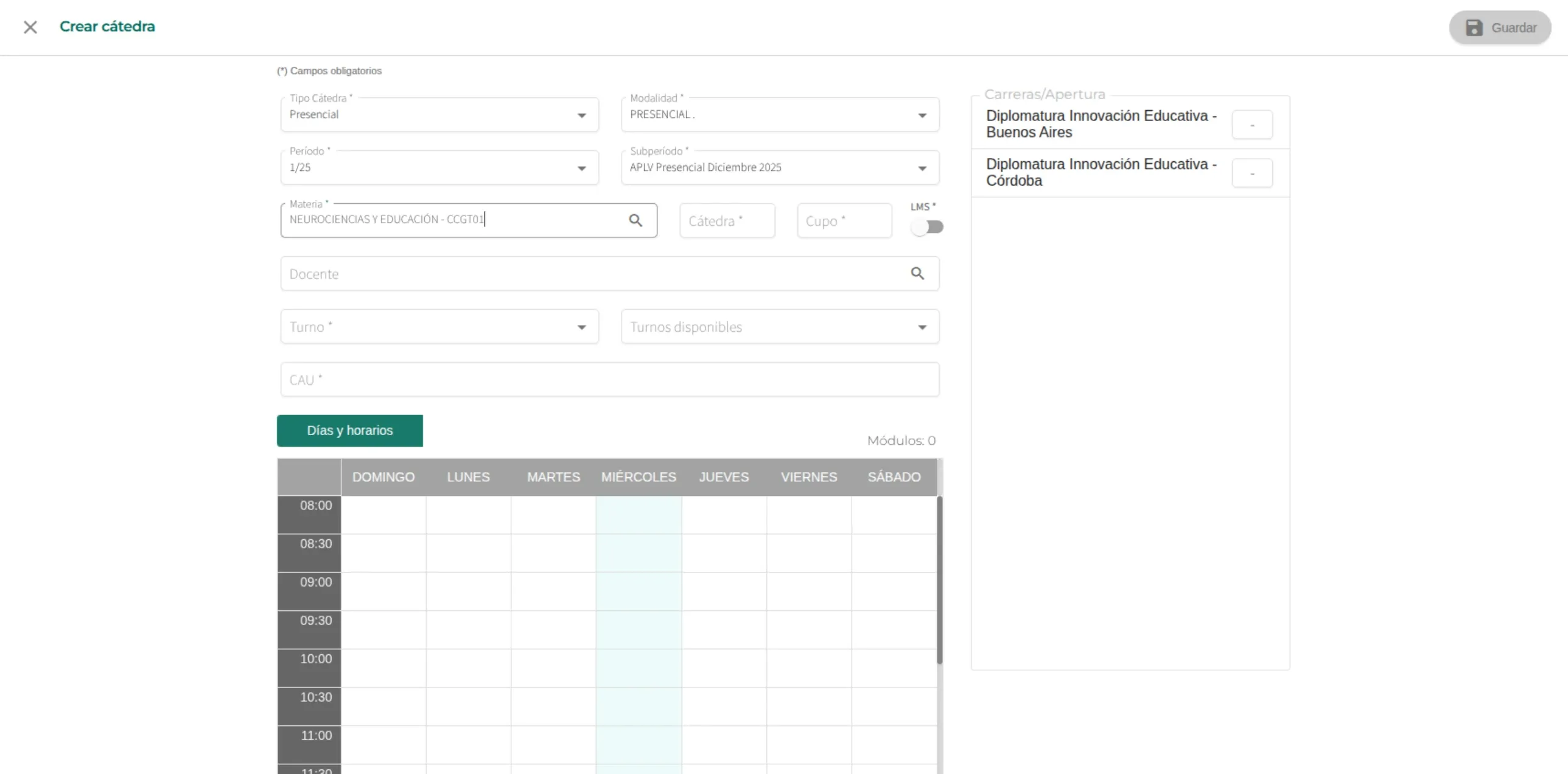
Technology that elevates academic quality
From a technical standpoint, the course planner was built on a modern, scalable architecture using technologies such as React, GraphQL, AWS, and Java, ensuring performance, security, and availability. Every component was designed to integrate naturally with the rest of the university’s academic ecosystem, including the curricular academic manager, the career manager, and the student portal.
Beyond technology, this project represents a cultural shift: a new way of thinking about academic planning—more collaborative, agile, and aligned with the future of education.
When planning becomes simpler, teaching becomes more meaningful.
We’re designing the future of education. Let’s talk ☕️


Roxana Villagra
Engineering Manager